Wednesday, April 25, 2012
Why Servanthood is Bad
Abraham, the head of a tribe, decided to follow a God who claimed to be the only God. That made Abraham and his people strangers in their own land. They journeyed as strangers through the world. And they developed
some unique ideas about responsibilities to strangers because they were strangers themselves.
Jesus’ disciples were also people who decided to become strangers –– in their own land and in others. They built communities based on their decision. That renewed their understanding of obligations to strangers, and hospitality was renewed. In every household, in every tent, the door was open –– to the stranger, the
outsider, the enemy, or potential enemy. And the stranger was one with whom one acted, not in service, but equality.
Then a terrible thing happened in third-century Italy. At the side of a monastery, they built a little room for strangers. And they called it a hospice. The church took over responsibility for the stranger. And Christians forgot what had been unique about their community –– how to welcome the person who was outside and hungry.
The hospice hook hospitality out of the community. "Hospice" became "hospital." The hospital became Humana, a for-profit corporation buying up church hospitals. Communities and churches have forgotten about hospitality. Now systems and corporations claim they can produce it and sell it and that you can consume it.
You must struggle with all your might to reclaim the central Christian act of hospitality. You will have to fight your local hospitals. You will have to fight Humana. You will have to fight the social services. They have commodified hospitality and called it a service. They have made a market of the temple. And you know what
you’re supposed to do the money changers: get ‘em out! Or bring into the church the hospitality that is at the center of understanding a relationship as a friend not a servant. A church’s response to people without should be hospitality, not services.
From 'Why Servanthood is Bad'
by John McKnight

Monday, April 23, 2012
Dalai Lama
Every one of us is getting older, which is a natural process. Time is constantly moving on, second by second. Nothing can stop it, but what we can do is use our time properly; that is in our hands. Whether we believe in a spiritual tradition or not, we need to use our time meaningfully. If over days, weeks, months and years, we have used our time in a meaningful way – when our last day comes, we'll be happy, we'll have no regrets.
Friday, April 20, 2012
Lederach
Social change that depends heavily on the magnetic attraction of shared opposition creates social energy that can generate large numbers in discrete time frames but has difficulty sustaining the longer term change. social movements rise and fall as visible moments rather than as sustained processes. This seems related to two important observations about how change happens.
First, social movements find that it is easier, and in many cases more popular, to articulate to what they are opposed rather than what they wish to build. Change is seen linear: Raise awareness first, then promote action by increased numbers of people to stop something, and finally, once that thing is stopped, develop action to build something different. Awareness and action have at times gone together and created extraordinary moments of change -- from local communities of civil and human rights, to nations overthrowing oppressive regimes. It has rather consistently been during the third part of the theory --developing action to build something-- where we run into difficulties and where the change processes seem to collapse.
Second, framing the process as one that must create like-minded communities produces a narrow view of change wherein little thought or work is given to the broader nature of who and what will need to change and how they will be engaged in such a process. In other words, the very way the issues and process are framed undermines the fundamental web of understanding that change must strategically build linkages and coordination with and across not-like-minded and not-like-situated relational spaces. Unlike a linear change theory, the web approach suggests that multiple processes at different levels and social spaces take place at the same time. The web approach does not think in terms of us versus them, but rather about the nature of the change sought and how multiple sets of interdependent processes will link people and places to move the whole of the system toward those changes. In pragmatic terms the web approach asks early and often: Who has to find a way to be connected to whom?
Nonetheless, there is a certain truth to the frame of reference that convincing large numbers of people to get on board with an idea is the key to social change. Awareness of information and the willingness to act on what one believes are indeed part and parcel of the larger challenge of how societies as a whole change and move toward new ways of relating and organizing their lives together. in settings of protracted conflict and violence, movement away from fear, division, and violence toward new modalities of interaction requires awareness, action, and broad processes of change. In this sense, numbers are important. However, it is equally important for us to look deeper at how we think this shift happens. Numbers count. But experience in settings of deep division suggests that what lies invisible behind the numbers counts more. In social change it is not necessarily the amount of participants that authenticates a social shift. It is the quality of the platform that sustains the shifting process that matters. Ironically, the focus on numbers has created a misunderstanding and misapplication of the concept of critical mass.
First, social movements find that it is easier, and in many cases more popular, to articulate to what they are opposed rather than what they wish to build. Change is seen linear: Raise awareness first, then promote action by increased numbers of people to stop something, and finally, once that thing is stopped, develop action to build something different. Awareness and action have at times gone together and created extraordinary moments of change -- from local communities of civil and human rights, to nations overthrowing oppressive regimes. It has rather consistently been during the third part of the theory --developing action to build something-- where we run into difficulties and where the change processes seem to collapse.
Second, framing the process as one that must create like-minded communities produces a narrow view of change wherein little thought or work is given to the broader nature of who and what will need to change and how they will be engaged in such a process. In other words, the very way the issues and process are framed undermines the fundamental web of understanding that change must strategically build linkages and coordination with and across not-like-minded and not-like-situated relational spaces. Unlike a linear change theory, the web approach suggests that multiple processes at different levels and social spaces take place at the same time. The web approach does not think in terms of us versus them, but rather about the nature of the change sought and how multiple sets of interdependent processes will link people and places to move the whole of the system toward those changes. In pragmatic terms the web approach asks early and often: Who has to find a way to be connected to whom?
Nonetheless, there is a certain truth to the frame of reference that convincing large numbers of people to get on board with an idea is the key to social change. Awareness of information and the willingness to act on what one believes are indeed part and parcel of the larger challenge of how societies as a whole change and move toward new ways of relating and organizing their lives together. in settings of protracted conflict and violence, movement away from fear, division, and violence toward new modalities of interaction requires awareness, action, and broad processes of change. In this sense, numbers are important. However, it is equally important for us to look deeper at how we think this shift happens. Numbers count. But experience in settings of deep division suggests that what lies invisible behind the numbers counts more. In social change it is not necessarily the amount of participants that authenticates a social shift. It is the quality of the platform that sustains the shifting process that matters. Ironically, the focus on numbers has created a misunderstanding and misapplication of the concept of critical mass.
Wednesday, April 18, 2012
Labels
Wayne Dyer once said that the highest form of ignorance is the rejection of a concept about which you know nothing. This resonates within me as I watch people look to labels for recognition as to whether or not an idea is acceptable to them. Rather than research the idea, people will reject it solely on the label: conservative or liberal, Israeli or Palestinian, Christian or Muslim, capitalist or socialist/Marxist/Maoist/Leninist/etc., democrat or republican, nationalist or loyalist......(I think you get my meaning).
Within this labeling there is the misinformed idea of only having two points in the argument so often on will hear that if you don't accept one sides' position that must mean you accept the other side. What a faulty propaganda fear driven notion. I believe that there are many positions within any argument. And horrors there might even be positions which take ideas from both sides to come up with a solution.
Look for yourself. Find out about the 'other side' but also find out about everything else in between and beyond. Look beyond the pundits for your opinion. Look beyond the labels for your decision.
Within this labeling there is the misinformed idea of only having two points in the argument so often on will hear that if you don't accept one sides' position that must mean you accept the other side. What a faulty propaganda fear driven notion. I believe that there are many positions within any argument. And horrors there might even be positions which take ideas from both sides to come up with a solution.
Look for yourself. Find out about the 'other side' but also find out about everything else in between and beyond. Look beyond the pundits for your opinion. Look beyond the labels for your decision.
Sunday, April 15, 2012
Just so you know
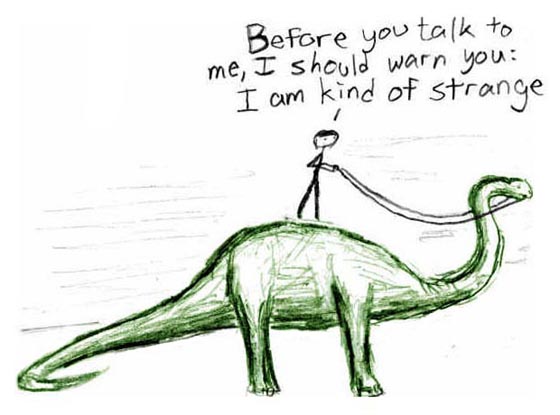
The picture is from xkcd.com
Monday, April 9, 2012
Scrabo Tower

Thursday, April 5, 2012
Should I think this?
Is it awful if I was hoping there would be at least one speaker at General Conference who would make some reference to April Fools?
Subscribe to:
Posts (Atom)